
보안뉴스 2025 SOAR 솔루션 리포트 기획기사
안녕하세요, AI 기반 지식 콘텐츠 서비스 전문기업, 시큐레이어 입니다.
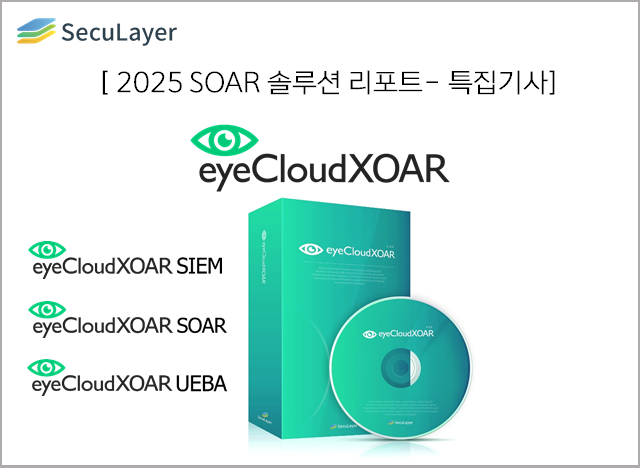
보안뉴스에서 진행되는 [ 2025 SOAR 솔루션 리포트- 특집기사]에
시큐레이어의 'eyeCloudXOAR' 솔루션이 소개 되었습니다.
'eyeCloudXOAR' 솔루션은 4년연속 조달시장 점유율 1위의 대한민국 대표 K-SOAR 솔루션 입니다.
-eyeCloudXOAR 솔루션 소개-
시큐레이어는 “SOAR는 보안 오케스트레이션과 자동화, 보안사고 대응 플랫폼, 위협 인텔리전스의 세 가지 핵심 기능을 결합해 구성된다”라면서, “이를 통해 보안 위협 유형에 따른 조직별 보안 대응 프로세스를 정형화하고 표준화함으로써 대부분의 작업을 자동으로 처리하며, 이는 인력이 필요한 부분에만 집중할 수 있도록 해 전체적인 보안 대응의 효율성을 극대화한다”라고 말했다.
약 21p 분량의 2025 SOAR 솔루션 시장 동향 및 전먕을 요약해 보자면 아래와 같은 내용으로 요약 해 볼 수 있습니다.
< 2025 SOAR 솔루션 시장 동향 및 전망 요약 >
SOAR(Security Orchestration, Automation, and Response)는 다양한 보안 솔루션을 통합 및 조율하고, 보안 위협 대응 절차를 자동화하여 보안 운영의 효율성을 극대화하는 플랫폼이다. 가트너(Gartner)는 2015년 SIEM(Security Information and Event Management) 보고서에서 SOAR의 초기 형태를 처음 언급했고 , 2017년에는 그 개념을 명확히 정의했다. SOAR는 기업의 보안 운영팀이 과도한 경고(Alert Overload)와 경고 피로(Alert Fatige)에 시달리고 , 솔루션별 수동 작업 및 비표준화된 대응 절차를 겪는 문제를 해결하기 위해 제시되었다.
1. SOAR의 핵심 기능
SOAR는 크게 오케스트레이션(Orchestration), 자동화(Automation), 대응(Response)의 세 가지 기능을 제공한다. 이 세 가지 기능은 독립적이기보다는 전체 대응 프로세스를 구성하는 유기적인 워크플로우 조합이다.
오케스트레이션: 다양한 보안 솔루션을 하나의 솔루션처럼 관리하고 조율하는 기능이다. 보안 전문가들은 SOAR의 핵심 요소 중 가장 중요하다고 생각하는 것으로 '오케스트레이션'을 39.3%로 가장 많이 꼽았다. 시큐어시스템즈와 시큐레이어는 효과적인 대응을 위해서는 여러 장비의 협업과 분석 과정이 필수적이므로 오케스트레이션이 가장 중요하다고 설명한다.
자동화: 미리 만들어놓은 '플레이북(Playbook)'을 통해 업무를 자동화하는 기능이다. 예를 들어, 악성 IP가 발견되면 차단, 파일 해시 조회, 계정 잠금 등의 업무를 순서대로 진행하도록 하여 보안 분석가의 업무를 줄이고 대응 속도를 높인다.
대응: 플레이북에 따라 위협에 대응하고, 각 공격과 대응을 '케이스(Case)'로 만들어 관리하며 협업 및 보고 기능을 포함한다.
2. 시장 규모 및 동향
국내외 SOAR 시장은 지속적인 성장세를 보이고 있다. Global Market Insight는 전 세계 SOAR 시장이 2023년 16억 달러에서 2032년 57억 달러로 성장할 것으로 예측했으며, 연평균 성장률은 15%로 전망했다. Grand View Research는 2024년 한국 SOAR 시장 규모를 3,860만 달러(약 536억 원)로 추산했으며 , 2030년에는 9,910만 달러(약 1,377억 원)까지 성장할 것으로 예상했다. 시큐어시스템즈 또한 한국 시장 규모를 약 500억 원대로 파악하여 이러한 조사를 뒷받침했다.
3. SOAR 솔루션의 특징 국내 SOAR 시장에는 시큐레이어, 안랩, 시큐어시스템즈, 로그프레소, 쿼리시스템즈 등 여러 기업이 경쟁하고 있다.
시큐레이어 'eyeCloudXOAR': SIEM, SOAR, UEBA를 단일 플랫폼으로 통합한 AI 기반 솔루션이다. 4년 연속 조달 시장 점유율 1위를 기록했으며 , 노코드(No-Code) 기반의 직관적인 GUI 플레이북 설계를 지원한다. K 공공기관 구축 사례에서는 기존 30분이 걸리던 위협 대응 시간을 1분 이내로 단축하는 성과를 보였다.
시큐어시스템즈 'Secure Orchestra': AI 기반 통합 보안 관리 플랫폼으로, '리차드(Richard)'라는 AI 엔진을 내재화하여 정탐과 오탐을 정확하게 구분한다. 6,800개 이상의 사전 정의된 플레이북을 제공하며, 드래그 앤 드롭 방식으로 손쉽게 플레이북을 설정할 수 있다.
안랩 '안랩 SOAR': 안랩의 보안관제 노하우를 집약한 솔루션으로 , 위협 종류별 대응 프로세스를 표준화한 '빌트인 플레이북'을 제공한다. 안랩 XDR과 연동하여 위협 탐지 시 '추천 대응' 옵션을 제공하고, 클릭 한 번으로 플레이북을 실행할 수 있는 기능을 갖추고 있다.
로그프레소 'Logpresso Sonar 4.0 Maestro': SIEM과 SOAR를 동일한 쿼리 체계로 완벽하게 통합한 솔루션이다. 온프레미스부터 클라우드 및 SaaS 환경까지 통합 관리가 가능하며 , 로그프레소 스토어를 통해 170개 이상의 앱을 제공하여 다양한 솔루션과 연동을 지원한다.
쿼리시스템즈 'QTIE': 국내 유일의 SIEM, SOAR, NDR 통합 XDR 솔루션으로 , 생성형 AI 기술을 접목한 AI Assistant 서비스를 내장하여 위협 탐지 및 분석 편의성을 극대화했다. 딥러닝 기반 탐지 엔진을 활용해 비정상적인 통신 패턴을 실시간으로 식별하고 , 500종 이상의 플레이북을 제공한다.
4. SOAR 도입의 장애 요인
보안 전문가 설문조사 결과, SOAR 도입 및 운영 시 여러 어려움이 드러났다.
보안관제 업무의 가장 어려운 점: '너무나 많은 보안 솔루션과 운영상 어려움'(23.4%) , '예산 부족'(22.1%) , '인력 부족'(19.3%) 등이 주요 원인으로 꼽혔다.
만족스럽지 않은 SOAR의 이유: '기대 대비 낮은 보안 자동화'(19.3%) , '솔루션 구축 및 유지보수 비용'(17.9%) , '기존 솔루션과의 낮은 호환성'(16.6%) 이 높은 비중을 차지했다.
SOAR에 대한 이해 부족: 사용자들은 SOAR가 도입만으로 모든 업무를 자동화할 것이라 기대하지만, 실제로는 플레이북 커스터마이징 및 외부 연동에 필요한 전문 인력이 부족하여 그 잠재력을 충분히 발휘하지 못하는 경우가 많다. 안랩은 SOAR의 도입과 확산을 어렵게 만드는 원인 중 하나가 SOAR에 대한 이해력 부족이라고 지적했다.
이러한 문제에도 불구하고, SOAR는 끊임없이 증가하는 보안 위협과 복잡해진 보안 환경을 해결하기 위해 반드시 필요한 솔루션으로 자리매김할 것으로 전망된다. SOAR, SIEM, XDR 등 솔루션 간 경계가 모호해지는 추세 속에서, 각 솔루션의 명확한 지향점을 이해하고 조직의 보안 목표에 맞춰 도입하는 것이 중요해지고 있다.
이외 SOAR와 관련한 최근 트렌드, 대표 주자 업체별 특징, 보안 전문가들의 SOAR에 대한 인식 및 설문조사 등 SOAR와 관련한 전반적인 내용들이 확인 가능 합니다.
보다 자세한 내용은 해당 배포된 특집기사에서 내용 확인 부탁 드립니다.
![[인사이트] 2026 K-보안 시장 17.1% 성장과 SOAR 완벽 가이드](/_next/image?url=https%3A%2F%2Fd1dvcjcxccygto.cloudfront.net%2Fuploads%2F1788338319894-830366296.png&w=3840&q=75)
![[ISEC 2026 현장 스케치] AI와 인간의 새로운 파트너십! 시큐레이어가 제시하는 차세대 보안 관제와 공급망(SBOM) 보안의 미래](/_next/image?url=https%3A%2F%2Fd1dvcjcxccygto.cloudfront.net%2Fuploads%2F1787117139602-156677098.png&w=3840&q=75)
![[행사참가소식] ISEC 2026 (제20회 국제 시큐리티 콘퍼런스)](/_next/image?url=https%3A%2F%2Fd1dvcjcxccygto.cloudfront.net%2Fuploads%2F1784784479791-415139056.png&w=3840&q=75)