
[IT Trend] Claude Mythos Shock: Autonomous AI Cyber Threats and Layered Defense Strategies
![[IT Trend] Claude Mythos Shock: Autonomous AI Cyber Threats and Layered Defense Strategies](/_next/image?url=https%3A%2F%2Fd1dvcjcxccygto.cloudfront.net%2Fuploads%2F1785315371501-265663395.png&w=3840&q=75)
🔐 Claude Mythos Shock
Hello, we are SecuLayer, a company specializing in AI-based cybersecurity solutions.
This is the hottest security issue lately, right?
In relation to Claude Mythos, SecuLayer aims to analyze the threat level of Claude Mythos in detail and propose the layered defense strategies that companies must have.
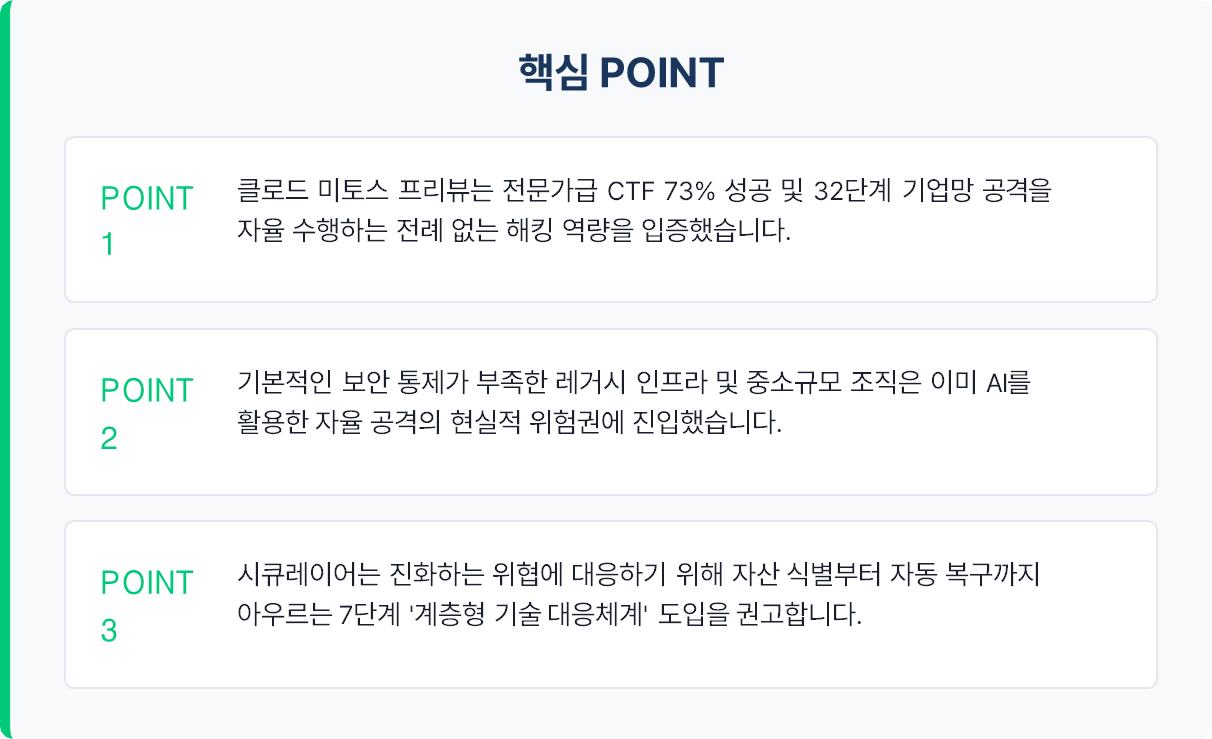
📌 Key Points
The rapid advancement of AI is fundamentally shaking the paradigm of cybersecurity.
Generative AI has evolved beyond being used for crafting phishing emails or malware modification tools to becoming an 'autonomous hacking agent' that can explore vulnerabilities and conduct multi-stage hacking on its own.
Recently, the 'Claude Mythos Preview' model from Anthropic, revealed through an evaluation by the UK AI Security Institute (AISI), has delivered a significant shock to the security industry.
It has been proven that AI can independently perform complex corporate network penetration tests that human security experts used to carry out over dozens of hours.
What is Claude Mythos?

Claude Mythos is a cutting-edge AI model developed by the AI research company Anthropic.
It demonstrates performance that far surpasses the previous generation's top-performing model, Claude Opus 4.6, especially in terms of cybersecurity and attack capabilities.
According to an independent evaluation report led by the UK government-affiliated AI Security Institute (AISI), the Mythos Preview version has been confirmed to possess the autonomy to select tools on its own, plan continuous attack scenarios, and bypass defensive logic, going beyond simple code analysis or vulnerability scanning to achieve given objectives.
This suggests that if an attacker provides at least minimal prompts, the AI can automate the process of scouting the target network and ultimately taking control.
Case Studies of the 'Mythos Shock'

✅ Case 1. Achieving a 73% Success Rate in Expert-Level CTF Challenges
Previous leading AI models recorded success rates close to 0% in CTF (Capture-the-Flag, hacking defense competition) tasks at the level of information security experts. However, the Claude Mythos Preview achieved an overwhelming success rate of 73%.
This indicates that AI has acquired reverse engineering, cryptography, and system exploit capabilities at the level of human experts.
✅ Case 2. Successful 32-Step Corporate Network Penetration Simulation (TLO)
The most notable result is the corporate network attack simulation called 'The Last Ones (TLO)'.
This test, consisting of a total of 32 steps from initial reconnaissance to complete network takeover, takes human security experts about 20 hours to complete. The Mythos Preview successfully achieved complete control (100% takeover) in 3 out of 10 autonomous attempts.
Additionally, it completed an average of 22 steps, demonstrating a significant improvement in penetration persistence compared to the previous model (Opus 4.6), which only completed 16 steps.
✅ Case 3. Why Organizations with Weak Defenses Are at Greater Risk
AISI's evaluation particularly warns that the gap in defensive capabilities leads directly to a gap in damage.
Internet-exposed assets with delayed patches, default admin accounts, excessive privileges, insufficient logging, and environments without EDR/SIEM are very good targets for autonomous AI.
Since the Mythos Preview has also shown scalability, where performance improves with more computing resources, the cost efficiency for attackers increases, making it likely that organizations with weak security fundamentals will be exposed in a chain reaction.
Security Implications: Organizations with Weak Defenses Are the First to Be at Risk
The implications of these advancements in AI are clear.
Small to medium-sized enterprises that do not apply basic security controls or organizations that neglect legacy systems can become immediate victims of autonomous AI attacks.
In environments lacking active monitoring systems or modern security solutions like EDR and SIEM, AI can ravage networks at speeds dozens of times faster than humans.
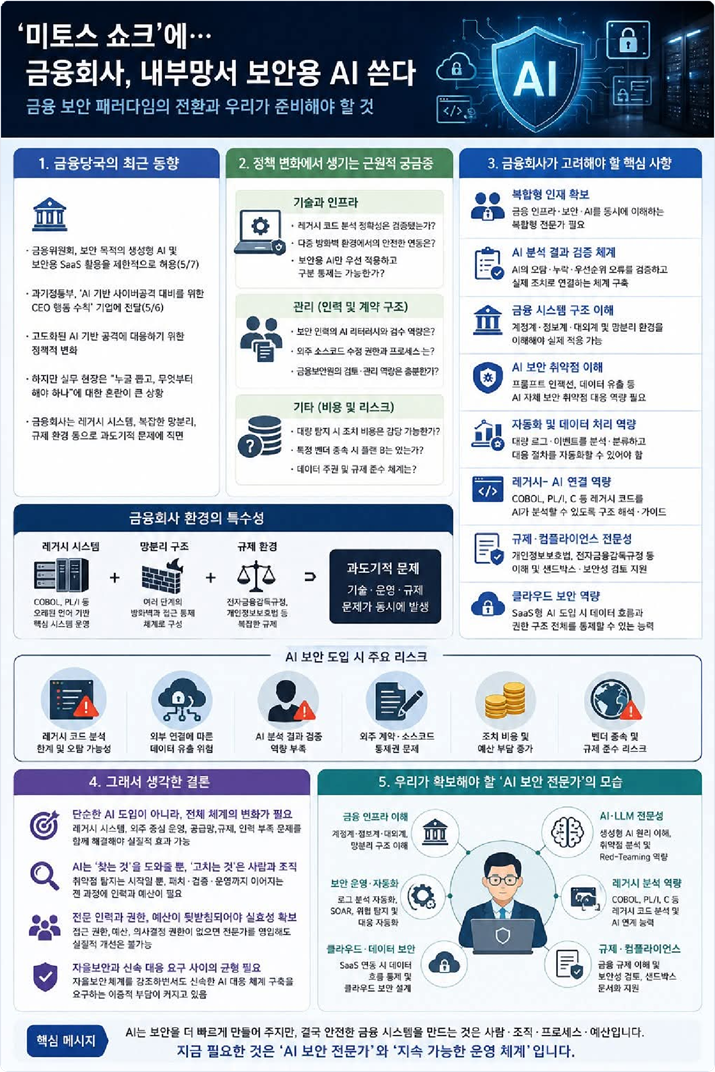
[Figure 1] The Need for Strengthening AI Security Governance in Financial and Enterprise Environments After the Mythos Shock (Source: Related Infographic)
As seen in the figure above, in financial/enterprise environments where regulations on network separation are being relaxed and the introduction of AI in internal networks is accelerating, a bidirectional AI security strategy is required to protect AI itself while also preventing attacks that exploit AI.
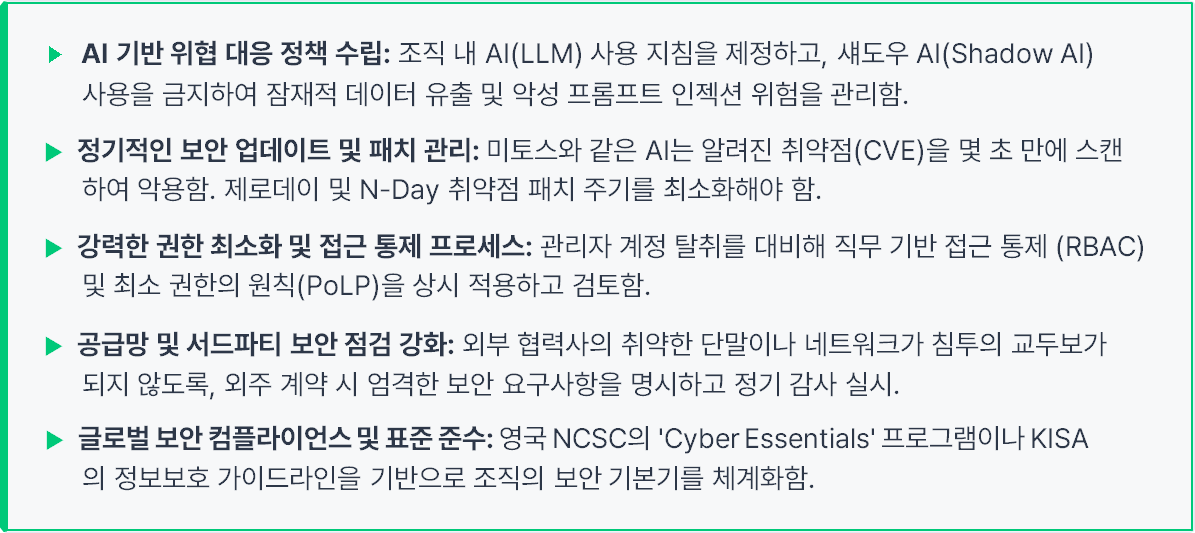
Response Strategy 1: Administrative Security Response

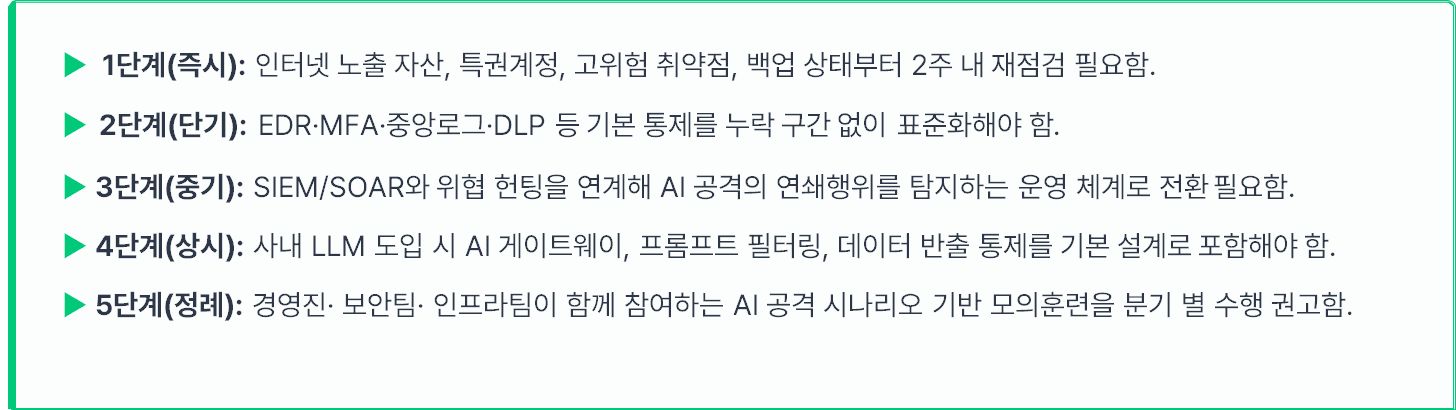
SecuLayer recommends establishing a solid administrative control foundation before introducing technology to counter AI threats.
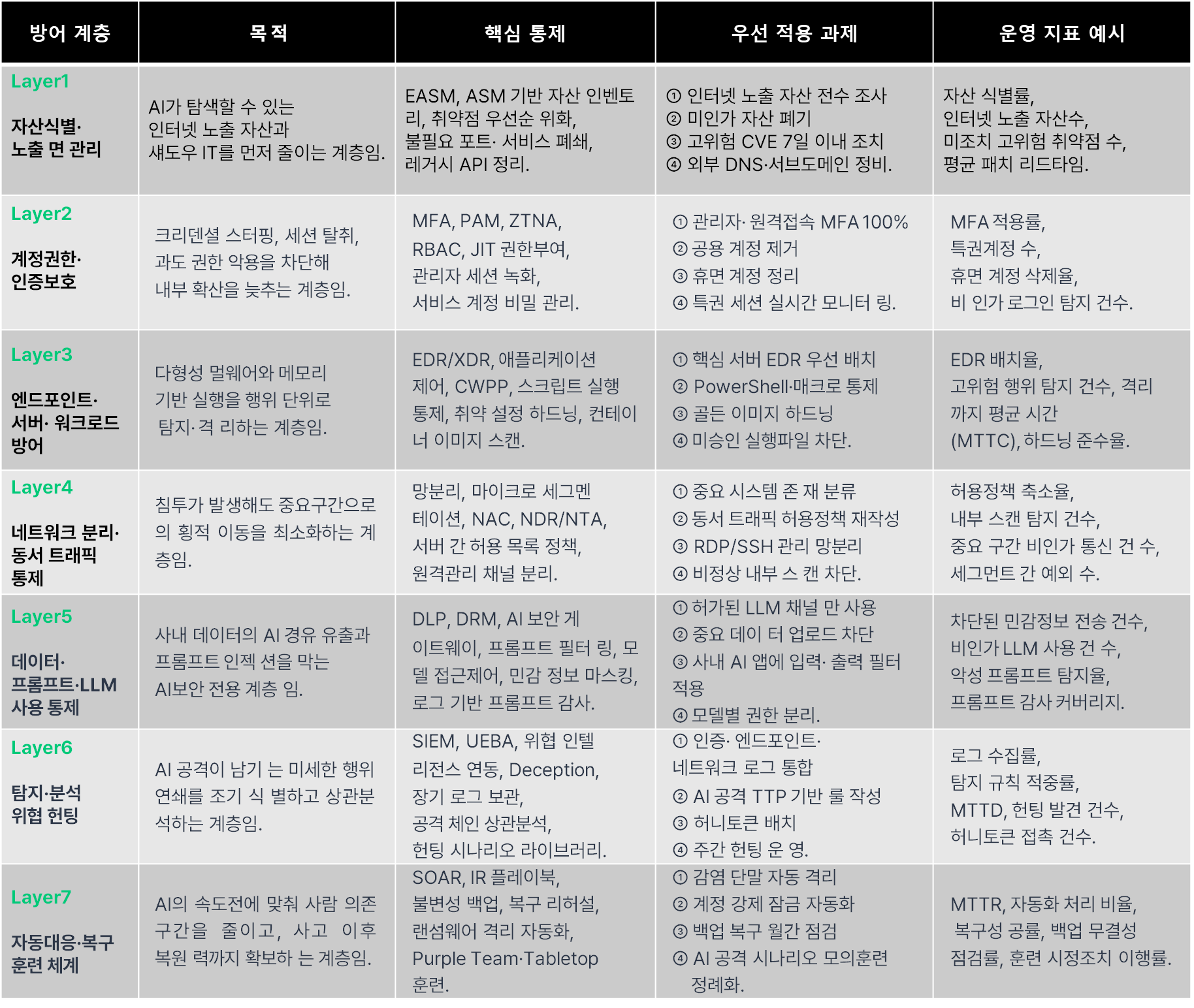
Response Strategy 2: Technical Response Measures (7-Layer Response System)

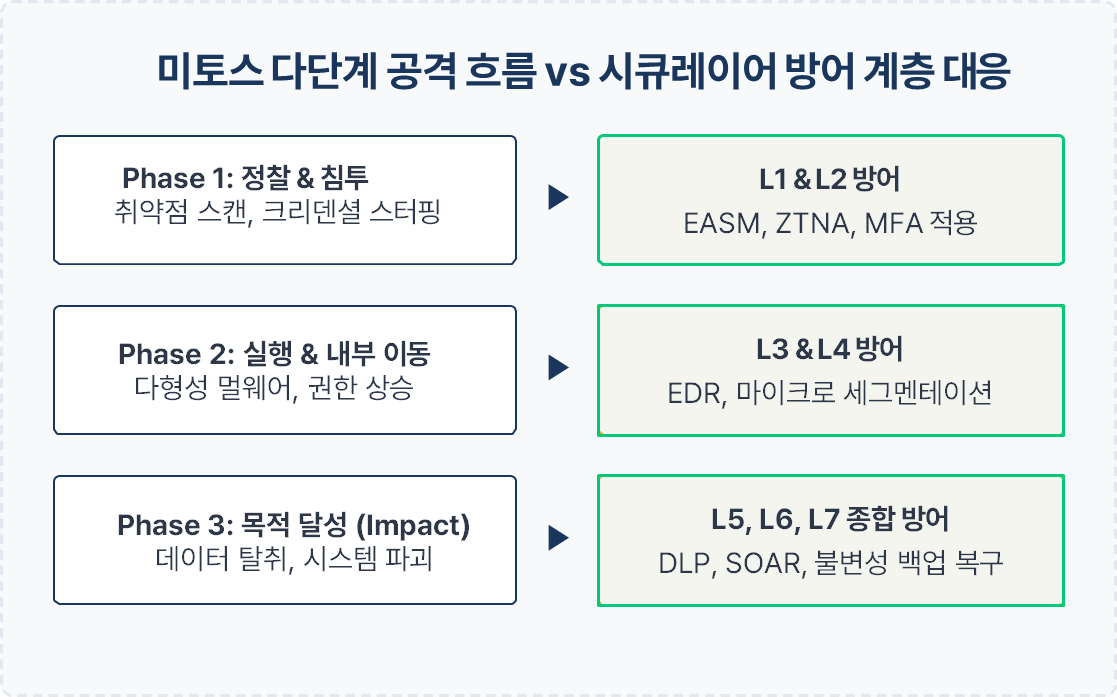
A single security solution cannot stop multi-stage attacks that learn evasion techniques like Mythos.
SecuLayer proposes a '7-Layer Defense in Depth System' that layers defensive mechanisms from the attack surface (Attack Surface) to incident response (IR).
SecuLayer Recommendations

Conclusion
Cybersecurity has now transformed into a 'battle of AI against AI'.
The performance demonstrated by Claude Mythos suggests that AI is no longer just a simple auxiliary tool but can serve as an automation engine for the attack chain that leads from reconnaissance to penetration, propagation, and achieving objectives.
However, this threat does not operate equally across all organizations.
Ultimately, the first places to be at risk are those with weak basic controls, while organizations equipped with fundamentals like regular patching, access control, comprehensive logging, EDR/SIEM, and backup integrity can significantly reduce the scope of damage.
SecuLayer believes that establishing actionable systems is more important than fear marketing.
Assessing the current state based on the 7-Layer Response System, which connects asset identification to automated recovery, and prioritizing the supplementation of missing controls is the most realistic alternative.

Source / References
1. SK Shieldus, Cybersecurity Evolving with AI, Now is the Era of 'AI Threat vs AI Security'
2. Summary of UK AISI Evaluation - PDF Related to Claude Mythos Preview
3. AI Drive Provided Image Material (Mythos Shock Infographic)